Enhance Production Capacity and Responsiveness to Demand Fluctuations
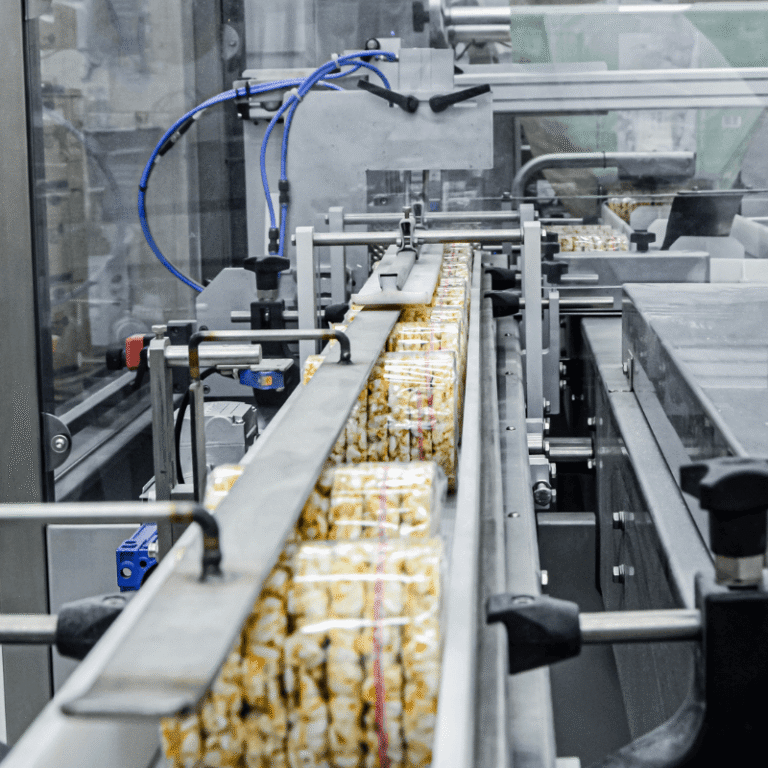
Food production facilities must adapt to changing product demand while maintaining high standards for hygiene, food safety, production continuity and efficiency. New equipment, packaging lines, utilities and automation often need to be introduced into existing spaces where accurate information about the real installation is essential.
SolidComp Reality Twin and our industrial 3D scanning services help food manufacturers, engineering teams, equipment suppliers and maintenance partners work from a shared, reality-based view of the facility. This supports faster project preparation, fewer verification visits and more reliable decisions before physical changes are made.
Why Food Production Facilities Need Verified 3D Data
Food and beverage plants are often developed in stages. Production lines are modified, utilities are rerouted, new equipment is installed and rooms are repurposed as product portfolios and capacity requirements change. Over time, drawings may no longer fully reflect the current facility.
Reliable as-built data gives project teams a measured reference before design and installation decisions are made.
- Reduce uncertainty before production line changes, capacity upgrades and equipment replacements.
- Support layout, piping, structural and equipment design with measured point clouds and 3D models.
- Check access, installation routes, maintenance clearances and available space before work begins.
- Compare design intent with actual site conditions and reduce repeated verification visits.
Laser Scanning and 3D Documentation for Food Manufacturing
SolidComp documents food production environments using the method that best fits the site, project phase, required accuracy and intended use. In complex facilities, several reality capture methods can be combined into one coordinated dataset.
Tripod laser scanning provides accurate geometry for processing areas, packaging lines, tanks, pipework, utility rooms, cold stores and equipment foundations. Mobile laser scanning can document larger production and logistics areas efficiently where conditions permit. Drone imaging and photogrammetry can support roofs, yards and external infrastructure. Coordinate and control point surveying helps ensure that datasets can be aligned and updated later.
Data can be delivered as point clouds, surface models, 3D models, 360-degree images, analyses and other agreed formats, or brought directly into Reality Twin for wider project and operational use.
Reality Twin for Production Line Changes and Brownfield Projects
Many food industry investments take place inside operating facilities. New processing equipment, packaging technology, conveyors, utilities or automation must often fit around existing production without creating avoidable disruption.
Reality Twin gives project teams one visual environment where measured site data, 3D models, 360-degree images, documentation and asset information can be viewed together. This helps teams understand the real facility without relying only on drawings, separate files or repeated site visits.
For food manufacturing projects, Reality Twin can support:
- Production line modification and capacity expansion planning.
- Equipment replacement, relocation and installation planning.
- Layout and constructability reviews before work begins.
- Remote site reviews with engineering teams, OEMs and contractors.
- Documentation of completed installations and future modification planning.
Planning with Hygiene, Cleaning and Zoning in Mind
Food production environments have specific requirements for hygienic layout, cleaning, contamination control and, where needed, temperature-controlled processing and storage. Plant modifications must therefore be assessed not only for fit and function but also for how equipment and structures interact with the surrounding production environment.
Accurate 3D data can provide spatial context for planning equipment locations, service access, pipework, utilities, drainage areas, partitions and cleaning access. A visual model also makes it easier for production, engineering, maintenance and food safety specialists to review the same proposed change together before installation.
Reality Twin supports planning and communication, but it does not replace hygienic design expertise, HACCP processes, food safety validation or regulatory requirements.
Maintenance, Shutdowns and Safer Work Preparation
Maintenance work in food production often needs to be completed within short planned windows while hygiene zones, production schedules and contractor access must be carefully managed. Equipment replacement and utility work can also affect surrounding production areas if site conditions are not understood in advance.
A reality-based 3D environment allows teams to review the work area remotely, confirm access and installation space and communicate the plan before personnel or contractors enter the facility. Documents and work instructions can be linked to the correct physical location, helping teams prepare work with a clearer shared understanding of the site.
From Project Data to Continuous Plant Operations
A food production digital twin should remain useful after one project. When Reality Twin is maintained over time, it can support maintenance, engineering, training, safety and future production changes.
Reality Twin keeps spatial information, documentation and asset context in one accessible view. It can make it faster to locate equipment and information, review field conditions remotely and prepare work before a site visit is required.
Reality Twin does not replace MES, CMMS/EAM, document management, automation, quality systems or other production applications. It acts as a visual operational layer that shows where information belongs in the real facility. Existing systems can remain in use and be linked or integrated where appropriate.
Who We Support in Food Industry Projects
Typical Use Cases
- Laser scanning before production line modifications, capacity expansions and equipment replacements.
- As-built documentation of processing areas, packaging lines, tanks, pipework, utilities and technical spaces.
- 3D source data for layout, piping, structural and equipment design.
- Installation planning for new process equipment, conveyors and packaging technology.
- Maintenance and shutdown preparation with a shared visual site reference.
- Remote project reviews with engineering teams, OEMs and contractors.
- Long-term 3D data management for future production changes and facility development.
Questions and Answers
Who provides laser scanning for food processing plants?
SolidComp provides laser scanning, mobile laser scanning, coordinate measurement, drone imaging, photogrammetry, 3D modelling and Reality Twin implementation for food and beverage production environments in Finland, the Nordics and internationally.
How can laser scanning support a food factory expansion or production line change?
Laser scanning captures the current geometry of the facility before design work begins. Engineering teams can use the measured data for equipment placement, pipe routing, layout planning, fit checks and installation preparation.
How is a digital twin used in the food industry?
A digital twin can bring measured site data, 3D models, images, documents and asset information into one visual environment. It can support production changes, investment projects, maintenance, remote collaboration, training and long-term facility development.
Can Reality Twin support hygienic design reviews?
Reality Twin can provide accurate spatial context for reviewing layouts, equipment locations, utilities, access and cleaning space. It supports collaboration between specialists but does not replace hygienic design assessment, HACCP or food safety validation.
Does Reality Twin replace production or maintenance systems?
No. Reality Twin complements existing systems by providing reality-based visual context for physical assets and site information. Production, maintenance, quality, document management and automation systems can remain in use and be linked or integrated where appropriate.
Prepare Your Food Production Facility for Future Changes with SolidComp
Food manufacturers need reliable information, efficient project execution and close cooperation between production, engineering, maintenance and external specialists. SolidComp helps build the data foundation from accurate laser scanning to a practical Reality Twin environment.
If you are planning a production line change, capacity expansion, equipment replacement, utility modification, maintenance project or long-term industrial digitalisation initiative, contact us to discuss how SolidComp can support your facility.
Contact Us Book a Demo

Company
Integrating physical asset management with dynamic true-to-life 3D facility visualisation.
Your trusted partner in industrial planning and for the whole life cycle of your industrial facility.