Reality-Based 3D Data for Data Centre Construction, Commissioning and Operations
Data centre projects are complex, fast-moving and highly dependent on accurate information. Power distribution, cooling systems, cable routes, security zones, fire protection, structural elements and access routes all need to fit together in a controlled and reliable way.
SolidComp Reality Twin and our industrial 3D scanning services help data centre owners, operators, EPC companies, MEP contractors and engineering teams work from a shared, reality-based view of the site. The result is better planning, fewer verification visits, clearer communication and stronger support for long-term operations.
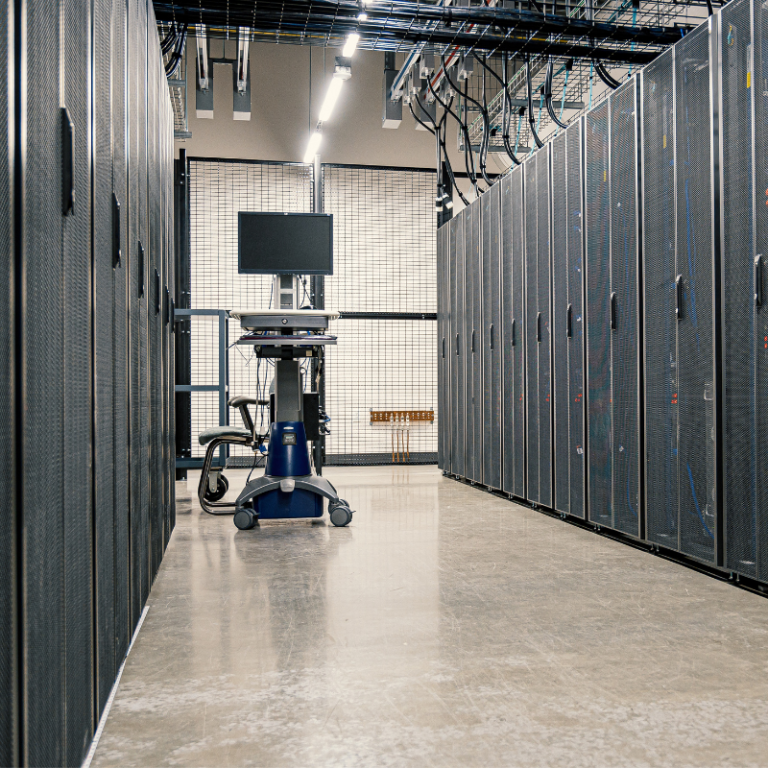
Why Data Centre Projects Need Verified 3D Data
Data centres contain dense and interconnected technical systems. Even small spatial conflicts between cable trays, switchgear, cooling equipment, pipes, ducts, access routes or fire protection systems can affect schedule, cost and maintainability.
Reliable as-built information helps project teams confirm actual site conditions before decisions are made. It also supports subcontractor coordination when multiple disciplines need to work in the same spaces under tight project schedules.
- Reduce uncertainty before design changes, retrofits or new installation phases.
- Support MEP coordination with measured point clouds, 3D models and visual site context.
- Verify installation progress and compare design intent with actual conditions.
- Create reliable handover data for operations, maintenance and future expansions.
- Make project information easier to share between owners, contractors, consultants and site teams.
Laser Scanning and 3D Documentation for Data Centre Construction
SolidComp can document data centre environments using the scanning method that best fits the project phase and accuracy requirement. In many projects, the most effective result comes from combining several reality capture methods into one coordinated dataset.
Reality Twin for Data Centre Construction and Handover
Reality Twin gives project teams a visual environment where measured site data, 3D models, 360-degree images, documentation and asset information can be viewed together. This helps teams understand the site without relying only on drawings, separate files or repeated site visits.
For data centre construction and expansion projects, Reality Twin can support:
- MEP coordination and constructability reviews.
- Remote site reviews for distributed project teams and subcontractors.
- Comparison of planned and installed conditions.
- Commissioning preparation and documentation handover.
- Maintenance access planning, equipment location and service route checks.
- Future upgrades, capacity changes and phased expansion planning.
From Construction Site to Operational Data Asset
A data centre digital twin should not be useful only during construction. When the model is planned for long-term use, it can become a practical operational reference for maintenance, safety, training and future development.
Reality Twin helps data centre teams keep spatial information, site documentation and asset context in one accessible view. This can support better daily decision-making, faster information retrieval and clearer communication between operations, maintenance, security and external partners.
Secure Implementation for Critical Infrastructure Requirements
Data centre projects often include strict requirements for information security, access management, data location and supplier reliability. Reality Twin can be implemented according to customer requirements, including environments where public cloud alone is not an acceptable option.
For high-security environments, Reality Twin can be operated within the customer’s own IT infrastructure as an on-premises solution. This gives the customer stronger control over data storage, access rights, network architecture and the technical boundaries of the operating environment.
SolidComp can discuss implementation and security requirements directly with the customer’s technology, IT or security teams to help ensure that the solution fits the project from the beginning.
Who we support in data centre projects
Typical Use Cases
- Laser scanning before data centre expansion or retrofit projects.
- As-built documentation for technical rooms, white space, plant rooms, corridors, roofs and external areas.
- MEP coordination for power distribution, cooling systems, cable containment and fire protection routes.
- Construction progress documentation and remote project reviews.
- Commissioning and handover support with verified geometry and asset context.
- Maintenance planning, equipment access checks and future replacement planning.
- Secure visual data environment for owners, contractors and technical stakeholders.
Questions and Answers
Who provides laser scanning for data centre construction projects?
SolidComp provides laser scanning, mobile laser scanning, coordinate measurement, drone imaging, 3D modelling and Reality Twin implementation for industrial and technical environments, including data centre construction and expansion projects.
How does a digital twin support data centre construction?
A digital twin supports data centre construction by bringing measured site data, 3D models, documentation and asset information into one visual environment. This helps project teams review conditions, coordinate subcontractors, reduce verification visits and prepare handover material.
Why is laser scanning useful for data centre MEP coordination?
Laser scanning captures accurate as-built geometry of technical spaces. This helps teams check how power distribution, cooling, cabling, ducts, pipework, containment, access routes and fire protection systems fit together before installation or modification work continues.
Can Reality Twin support existing data centres and expansions?
Yes. Reality Twin can be used for existing data centres, brownfield expansions, retrofits and future capacity planning. New scans and models can be added over time when the facility changes.
Can Reality Twin be implemented on-premises for data centre projects?
Yes. For customers with strict information security or data location requirements, Reality Twin can be implemented as an on-premises solution within the customer’s own IT infrastructure.
What data can be connected to a data centre digital twin?
A data centre digital twin can include point clouds, 3D models, 360-degree images, documents, asset information, maintenance data and operational data sources, depending on the customer’s requirements and integration scope.
When should a data centre project be laser scanned?
Laser scanning is useful before design work, during construction, before commissioning, at handover and before future expansion or retrofit work. The right timing depends on the decisions the data needs to support.
Can a digital twin help reduce site visits during data centre projects?
A digital twin can reduce the need for repeated verification visits by giving stakeholders remote access to accurate visual and spatial site information. Site visits may still be needed for practical work, safety checks and final verification.
Prepare for Future Data Centre Requirements with SolidComp
Data centre projects require speed, precision and reliable cooperation between many specialist teams. SolidComp helps you build the right data foundation from laser scanning to a practical Reality Twin environment.
If you are planning a new data centre, expanding an existing facility, preparing a retrofit or improving operational documentation, contact us to discuss how SolidComp can support your project.
Contact Us Book a Demo

Company
Integrating physical asset management with dynamic true-to-life 3D facility visualisation.
Your trusted partner in industrial planning and for the whole life cycle of your industrial facility.